To Move in Light: Literary Offerings to Beauford Delaney
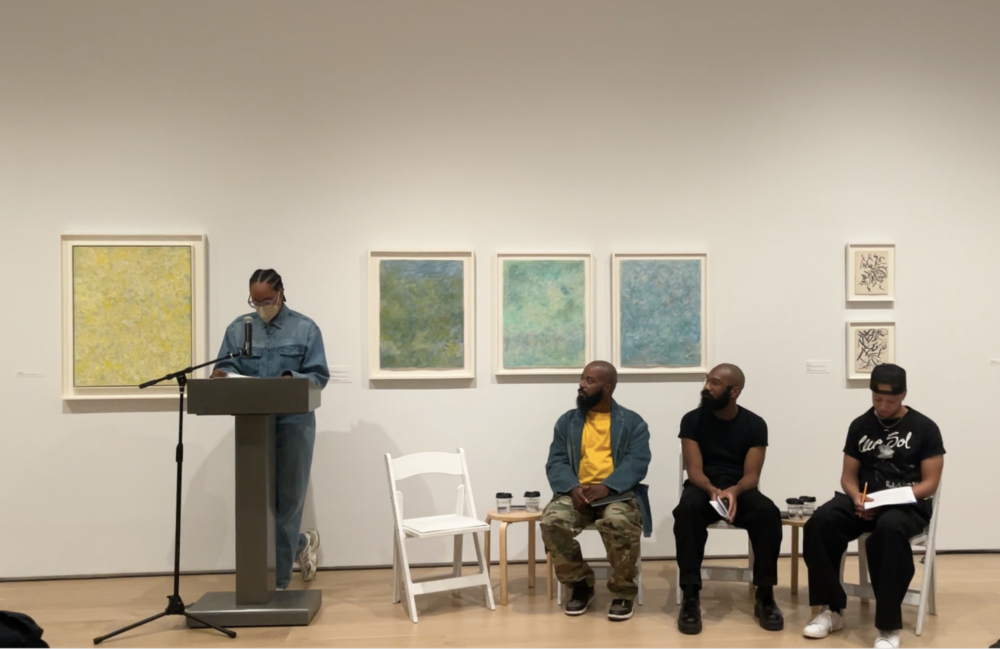
Rebecca DiGiovanna:
Welcome to The Drawing Center. My name is Rebecca DiGiovanna. I am an assistant curator here at the Drawing Center and along with our executive director, Laura Hoptman, a co-organizer of In the Medium of Life, the drawings of Beauford Delaney. It has been such an honor to present this exhibition, which was made possible by a very generous group of sponsors, which include Monte Ebers, Agnes Gunn, Marie Hussay, and Henry R. Kravis, Alice and Tom Tisch and Isabelle Stanao-Wilcox. Special thanks also to Michael Rosenfeld Gallery for their support and the estate of Beauford Delaney for their cooperation and the organization of this exhibition.
I am delighted to welcome you here and to introduce our moderator for this afternoon's literary panel, the amazing Jessica Lynne. Jessica is a writer, art critic and founding editor of Arts Black, an online journal of art criticism from Black perspectives. Her writing has been featured in publications such as Art Forum and Oxford American, where she is also a contributing editor. Jessica is also the newest recipient of the 2025 Rabkin Prize, as well as grants from the Graham Foundation and the Andy Warhol Foundation. She holds an MFA in writing from Sarah Lawrence College and has taught at institutions, which include the New School and Yale School of Art. Jessica is accompanied by an equally esteemed panel, whom she would like to introduce, and so without further ado, I would like to welcome Jessica to the podium.
Jessica Lynne:
Good evening, everyone. Thank you for being here. I know this is going to be a wonderful moving and imaginative night of language making. Love seeing so many friends. Thank you. Thank you so much. Appreciate you. We will be having an evening of literary offering, so you won't hear from me after I leave this podium, but I can promise you that the room will be full and I hope that you leave encouraged by what you'll hear. First, I'd like to extend my gratitude again to Laura, Rebecca, Amy, for this invitation to program and evening dedicated to Beauford Delaney, and of course to Joe Tolbert, Jr., Najee Omar and Justin Allen, tonight's writers and artists, who I'll be introducing a bit more formally, for saying yes to being here and sharing a bit of their magic with us. Thank you all.
When I think about the life of Beauford Delaney, I think of a person who remained fervently curious about his own depths and the expansive possibilities contained within his art. I think of a person who found and made home, found and made family in many locales and communities like Boston, New York and Paris. I think of a person who loved as best he could across the constructed social boundaries that we tend to erect as people in spite of contemporaneous norms and biases or social expectations. I think of a person who was as loved immensely by his people as the world changed around him. Beauford Delaney was a Black, southern, disabled gay man from Knoxville, Tennessee. He was a preacher's kid, he was a musician, and he was, the longer I continue to think about it, a person living in a world that might not have actually been ready for him. Still, through his body of work, Delaney has developed a kind of grammar for the multiplicity of being. He is as precise and sharp as he is playful and daring.
When I was asked to dream up a program for tonight, I knew that I wanted to consider how Delaney's lineages of playfulness and daring of precision show up in other wayfinding modes. As a writer, I turn to other writers and alongside this intention, I wanted this evening to be anchored in the expansiveness that is Black, queer life as a kind of declaration of presence, a declaration that sometimes seemed out of reach for Delaney while he was earthside. The artists gathered with us tonight, Joe, Najee and Justin, are dreamers and performers and organizers. They are from or have touched the places Delaney called home. They tread the grounds of the speculative, the sensual, the spiritual, and the psychic.
Earlier, I used the word omnivorous to describe their work and to describe the way that they move across different modes of aesthetic making, and I understand Delaney to be that way as well. I learned from them and I have no doubt that you will too. The prompt tonight was simply this, respond to Delaney and this exhibition in any way you see fit. This evening, they will invite us to move in light that was just as bright as Delaney's own.
As a matter of housekeeping, I'm going to introduce each writer before their offering and there will be no formal Q&A at the conclusion of the program as I mentioned earlier, but it's my hope that the offerings will fill you with questions, point you towards revised horizons, or charge you to find your own language for loving and living. I strongly encourage you to find them tonight after the evening is over and spend some time talking with them about the choices they make as artists.
On that note, I'm going to introduce our first reader, Joe Tolbert Jr. Joe Tolbert Jr. is a cultural strategist, facilitator, minister, writer, an advocate working at the intersection of art, culture, spirituality, and social justice. Joe leads initiatives that expand opportunities for artists and cultural practitioners while advocating for sustainable investment in the arts. His personal experiences, including the tragic loss of a loved one to police violence, shaped his understanding of art as a vehicle for healing, justice, and systemic change. Today, his work continues to center on fostering innovation, securing equitable access to resources and empowering artists to drive cultural growth across Appalachia and the South. His strategic leadership continues to position Appalachia and the South as hubs for artistic excellence and creative resilience, ensuring artists and cultural practitioners have the support, visibility and resources necessary to shape the future of the region. Please join me in welcoming Joe to the mic.
Joe Tolbert Jr.:
All right, how's everybody doing? That's how y'all doing? How's everybody doing? Okay, good. Once a church kid, always a church kid, so I love when the audiences talk back to me. Yeah, so I'm so grateful to Jess and the drawing center for inviting me here because I've been thinking about me in Beauford for a long time because the more I delved into his life and work, I'm like, oh, another similarity. Oh, another similarity. This is a draft that I'm going to be sharing with you all that's exploring our inner subjectiveness and where our lives merge and diverge. First, one of the things that I found out about Beauford in reading and learning about him is he would often sing, so to calm my own nerves and invoke a Beauford spirit here, I want to sing my version of a spiritual, which he was often fond of singing with others.
Walk with me, Lord. Walk with me. Walk with me, Lord. Walk with me. While I'm on this healing journey, walk with me, Lord. Walk with me. Be my friend, Lord. Be my friend. Be my friend, Lord. Be my friend. While I'm on this healing journey, be my friend, Lord. Be my friend.
"Nobody knows my face, the other face. What must be done, time runs out," Beauford Delaney, journal entry. Dear Beauford, it is surprising to me that when I was growing up Black and queer in Knoxville, Tennessee, nobody spoke your name. It saddens me that our first encounter wouldn't be until I packed my life in boxes and moved to New York City for graduate school. On a lunchtime visit to the Studio Museum in Harlem, I was aimlessly wandering around the main gallery until a painting caught my attention. Standing in front of the painting, my gaze met a Black man sitting, legs crossed with his hands resting calmly in his lap. His green suit was set against a brilliant yellow background. Ever the curious person and a person that wants to know all I can about Black art, I looked at the description and it read Portrait of a Young Musician, 1970, Beauford, Delaney, Knoxville, Tennessee.
Standing there, I wondered who was this painter from my hometown that graced the walls of the studio museum in Harlem? A confluence of events would bring us back together, most notably in Dr. James Cohn's life and thought of James Baldwin class. It had your future biographer, David Leeming, as a guest speaker and after learning about your influence on a young James Baldwin, I wanted to learn as much as I could about you. As time passed and our relationship deepened, I realized that as much as I was looking for you, I was looking for myself. I was looking for a Black Appalachian queer sensibility that could give me wisdom for living, but as I mined your life, I only got the trace, the blur of the queer life you lived.
As I continued getting to know you, it became clear the role you played in the lives of those around you. Words like 'Buddha', 'sage' and 'Saint' would come up over and over and over again. I wondered though if they knew what it took for you to cultivate that light you so generously shared with them, with the world. Viktor Frankl rightly observed that what is to give light must endure the burning. I can't imagine what it was like for you growing up Black and gay in our hometown in the early 1900s. Beauford, I know that one of the reasons we hide our true face is because when we open ourselves up to the world, we also open ourselves up to being hurt. I also know that home doesn't always mean safety and that sometimes the places that make us who we are can no longer hold all of who we are becoming, and it leaves us longing with a life unfulfilled, a life waiting to burst forth.
Beauford, who did you love? Did you have a support system that nurtured your queerness as well as your blackness? The place that makes us can have a way of making us feel like we need to make a home in hiding. When I think about growing up in our hometown, coming into the awareness of my queerness made me feel out of place, like I couldn't really lay claim to Knoxville being mine. It ignited in me, as the page moved in the wrong direction. Steve, that's the playfulness of Beauford coming out, right? Sometimes the places that makes us who we are can no longer hold all of who we are becoming, and it leaves us longing with a life unfulfilled, a life waiting to burst forth. Beauford, who did you love? Did you have a support system that nurtured your queerness as well as your blackness? The places that makes us can have a way of making us feel like we need to make a home in hiding.
When I think about growing up in our hometown, coming into the awareness of my queerness made me feel out of place, like I couldn't really lay claim to Knoxville being mine. It ignited in me the search for belonging that ultimately left me restless. The messages that I got from those around me was that my queerness was wrong and in my mind, it made my very being a mistake. Like you, Beauford, I too am the son of a preacher and like you, spend a lot of time in church, a lot of time in church. Even though I tried to fight those messages about people who love like us being destined for damnation and disease, it took root within me making me hide my face to try and find the answer to that loneliness, but the loneliness remained.
I'm reminded of one of my favorite verses that didn't make the final cut of the Bible we come to know, one of my favorite verses that comes from the Gospel of Thomas, verse 70 that says, "If you bring forth what is within you, what you bring forth will save you. If you do not bring forth what is within you, what you do not bring forth will destroy you." Though I tried to hide my truth face for safety, I realized that what I wasn't bringing forth was silently destroying my spirit. The beauty in this is that the internal struggle was the driving force for my spirit to create out of its need to save itself.
I often think about that foundational lesson in queer sight that you taught a young James Baldwin to look again. He said that on a walk with you through the streets of New York City, all he saw was a brown leaf on asphalt, oil moving in the water of a gutter, a blade of grass growing from concrete. Through your seeing and urging Baldwin to look again, what he saw began to change. The development of queer sight, allowed Baldwin to see the colors trapped in the leaf, the rainbow, and the gutter. He wrote of the color black that though black has been described to me as the absence of light, it became very clear to me that if this were true, we would never have been able to see the color black. He goes on to say the light is trapped in it and struggles upward, rather like the grass pushing up through the cement.
What I wish the people around you, excuse me, truly understood with your light, is that you had to cultivate it and endure the burning, that the light you had had to journey and struggle upward and into the world like the blade of grass in the concrete. When I think about that question in the quote that I began this letter with, what must be done, what must be done is that we look again and again and again. We must look for our true face for safety to let the light of our true face show of that lesson.
Baldwin said that it was humbling to be forced to realize that the light fell down from heaven on everything, on everybody, and that the light was always changing. Beauford, the light within us is always changing. Sometimes it may be dim, sometimes as bright as the yellow in your paintings. Beauford, the miracle is that whether it is bright or dim, no matter how the light changes, it never goes out. Beauford, thank you for your light. I can see your face, the other face. Because of your light, I can see my face a little more clearly and no matter how hard the struggle to maintain my light becomes, I will keep looking again and again and again to see the light in everything around me. While I'm on this healing journey, walk with me, Lord. Walk with me. Thank you.
Jessica Lynne:
Thank you, Joe, for grounding us in the church. All the secular saints are thankful for bringing Knoxville into the room and for opening this portal of light that will continue to move through this evening. Our next reader is Najee Omar, who I have almost known for 20 years, which is wild to think about. Anyway, Najee is a writer, performance artist and organizer whose work lives at the crossroads of poetry, theater and community. His writing equal parts, raw and lyrical, imagines a world where Black queer love is deeply seen and celebrated.
As a poet, his work appears in Poet Lore Magazine and the Anthology, That's a Pretty Thing To Call It. As a playwright, he developed his debut stage play, Little Black Book through residencies with SPACE on Ryder Farm, in Hi-ARTS here in New York City. He's currently a 2025 Learning to Love fellow, creating a new play inspired by a queer elder's life. Najee also designs public art and storytelling programs in partnership with institutions like BAM, the Public Theater, Lincoln Center and The Met. He was named a Fort Greene Community Hero and serves on the board of the Fort Greene Park Conservancy. When he is not creating, he's riding his bike, getting lost in music, or catching up on The Real Housewives, a classic. Najee lives and loves in Brooklyn. Please join me in welcoming Najee Omar.
Najee Omar:
Brownstone, stoop sittin', summertime, block party, skippin', Brooklyn. Brooklyn. Brooklyn. Did I say Brooklyn? Brooklyn. Brooklyn. Brooklyn. Brooklyn. Brooklyn Streets. I come from St. James in Fulton. C Train, Clinton, Washington style, golden crust, nippin', fantasy island sippin', where high school dropouts and truancy parties. Where corner stores ain't nothin', but hood casters, home to Arabian nights. Boxing rings for middle school fights and street pharmacies. See, I come from New York City subway tunnels, underground museums with graffiti hangs like, like Beauford paintings and the homeless are still life, statues with a pulse, yellowing from pit stains seeing where the people golf as we tour these amusement parks of poverty on our screwed up, sleep train, train, train, train, train, train rides on. See, I come from head boppin', no music hand clapping, teeth smacking, feet stomping, double Dutch hopping, gun popping, and rock, paper, scissors says, rock, paper, scissors says.
Kid, I come from Black American bloodlines, from Laila Hathaway baselines. I pledge Alpha Phi Alpha Solo fraternity lines. Shakespeare meets Barack poetry lines, maternity stretch marks, Black don't cry. Don't you Think about crossing that stock and shop supermarket line scene that traced back to 1920s Harlem nights, where poets wore zoot suits that were creasing, crusting, top hats that were boomin', pattin', pattin', pattin' and pattin'. I hear Ella's steps swinging and swaying like ladies legs, like brushstrokes in the air when they dance. How come from the corpses of crown heads, Dr. King, king heavy, King Oliver, King's county gun down, men who wore their skin less light or their hoods too tight. Torpedo fists ready to rip the sky, raised hands, closed shut, like cocoons growing wings in the center of their grips they held cold waiting to fly.
See, I come from the resistance of Angela's fro, from the will of Marley's locks. I come from the thirsting eye of a grandmother, a dry well that longs to tear for all the children she bathed and buried with a pair of hands refusing to receive her five-finger soldiers, sometimes forgetting to pray before war were made, for the piano so she could play a song to sing and again, there will be life in the middle of her chest. I come from, I come from magicians, a magical man and a woman who turned two-bedroom apartments into royal mansions with a world-class view of next door, from a father whose love begins to age over time in his wife, the woman who carried the world on her left shoulder, begging her need for balance.
I come from the baddest woman to walk this earth, a true ride or die, a woman who reached into space and handed me the world with her bare hand. She said, "Son, anything you want is yours." I come from the flyest chick in Brooklyn, from a woman who was known by many names. I come from a mother, from a mother, from a mother who was pure magic, who could make everyday feel like a holiday. Although she is no longer here with us in the physical, I come from her goodbye as a parting gift, as a beacon of light, as a road map. If this is where I come from, then there is no question where I'm headed. If you're still with me, say oh, yeah.
Audience:
Oh, yeah.
Najee Omar:
We could do better than that, right, Joe?
Joe Tolbert Jr.:
Right.
Najee Omar:
Come on. Say, oh, yeah.
Audience:
Oh, yeah.
Najee Omar:
Okay. Beautiful. Beautiful. Hello everyone.
Audience:
Hello.
Najee Omar:
It is such an honor and a privilege to be in this space. Thank you again, Jess. When I walked through Delaney's exhibit, I kept seeing myself, not literally, though the self-portraits pulled me in close. Excuse me. That was my timer. I'm going to start it again.
Jessica Lynne:
Take your time.
Najee Omar:
Okay. Thank you.
Jessica Lynne:
You know what to say.
Najee Omar:
I kept seeing myself through the self-portraits that pulled me in close. It was the way he layered himself again and again. There were so many versions of his own face around the room. Sometimes they were blurred, sometimes they were sharp. I often found myself wondering, was this even him or was it the way he felt himself on that day? That is one of the things that stayed with me because when I write, when I move, when I speak, I often find myself in fragments too, through my lovers, through the city that raised me through the people who hold me and the people that I hold and even through the spirit of my mom who passed on, but who still appears in almost every line that I write.
Delaney played with shape and color and light, and I do a little playing too. I play with rhythm, with sound and with breath. What he does on canvas, I do on the page, in the body and in the air between us. Today's offering is my way of holding those colors, turning them into voice, into pulse and into music that you can feel in your chest. You heard a little bit about this in the poem that I read, which was called Hands Kings in Brooklyn Streets, and I thought it was appropriate to start with that piece because I know that there were three places that were very pivotal to Delaney's journey. So Knoxville, New York, and Paris. The last piece was my homage to Brooklyn, the best city in the world, but I happened to write that in Paris. Delaney is with us, so thank you.
I can't begin or continue without acknowledging the chosen people who held Delaney and who sustained him. His circle was light and it makes me think of my own circle. The ancestors and Gods who lift me, poets and writers like Essex Hemphill, like Octavia Butler, educators like Stan Kennard and warriors and champions like my mother, Yvette Bound Ritter, my grandmother, Carrie May Ritter and my great-grandfather William Smith. I speak their names. They're the brushstrokes behind me and the palette I return to when I need to remember who I am. As I move on and share just two more pieces with you, I invite us all Delaney's color into the richness of all his yellows and his reds, the way they hum against one another. I invite you to lean in into my rhythm, the beats and sounds and the way I offer a way of saying, this is how I see myself. This is how I do my own kind of painting even without a brush.
This is a piece I wrote specifically for tonight. It is called The Self-Portrait Series. You all are the first to hear it, so consider yourselves privileged. One, self-portrait as traffic light. This is for the boys who don't quite have a place we call home, spilling ourselves onto Malcolm X and Bainbridge, onto Nostrand and Atlantic, street corners unfold under our yellows, our greens, and our reds. This is for us boys, rusted knucklehead boys who flicker more than we reflect, everything beneath us spreading and screeching.
All we want is to rest our glow onto something still, something warm. This is for us craving boys with circular and weathered eyes who see too much, too many grandmothers pushing too many shopping carts with too many groceries, too many drivers without seat belts and too many people too busy to pause rushing by. Today, we see ourselves. Today, we trust ourselves. Today, we love ourselves, even if some unyielding, fatigued man flicks us off, runs straight through us, even if no one, and I mean no one, hears us when we shout, stop to Self-Portrait as Bathhouse. I got to pause for a second. When I was walking through the gallery and I saw that he had the Self-Portrait as a Bathhouse, I was like, I know that's right. All right.
Two, Self-Portrait as Bathhouse. Sometimes I'm as simple as a towel slipping off a man's thirsting waist or the glass of a shower stall frosted by hungry breath. I like to think myself as slippery as the slapping of wet toes. Sometimes, I'm just the drip drip. I'm just the rusting key dangling on the wrist of a stranger waiting and sometimes, I'm just the waiting, waiting to be inserted inside something dark, inside something cold, some door, some hole, eager to unlock something other than myself. Sometimes I'm the sturdiest lock in the sinner's den, too good at clicking and snapping, all these naked eyes on me, heavy with wonder, what's on the side of my closed door. Just the laboring breath of a recently widowed man, a 20-something briefly whispering about his first time, an unmade bed thudding against my back wall, [foreign language 00:33:33], an almost empty bottle of lube and a neighbor full of secrets. What's mine? My red seeping light. How I bewitch and seduce until everything and musky and steaming is completely bare, spilling open before me.
Three, Self-Portrait as Lover. You can't understand how my eyes do the piercing thing, how I showed up to work on Monday with my top unbuttoned, my collar loose this morning. I left the house and I refuse to be clean-shaven. Instead, I choose to be kind. I stand in the mirror and sometimes I see a vegan chef, other times a Wall Street techie or a Pisces moon. God says, "Am I all or am I neither," and I just reply, "Yes." I listened to Lil Wayne, but after two shots of Henny, I prefer Kimberl. I'm funny like that. I promise you'll never have to dance with me at Lambda. I can do that on my own. I was born like this, under a full moon like this, but tonight, I rep Charlotte, or tonight, I rep Knoxville or tonight, I rep the three train to Flatbush like this. Tonight, I rep the weary. I have sprayed myself onto these walls so many times I echo in bedrooms like this. I promise, if you just lean in, you can hear the drums in my exhale saying, "Is this the last day of my life?"
Four, Self-Portrait As My Mother. I am not today. I am only yesterday, the day before and the day before that I am only hair far-reaching in thread light. I wish I were continuous, but that would be a lie. I am unbroken. I am non-linear. I am living only in the corners of your mind. I am taking up space in as much of your heart as you will allow. I'm living only in this poem. I am only if you say so. I'm infinite as long as you never stop saying. I am living golden brown splatters freckling your cheeks. I slick back into ponytail because I'm 1959. I'm Lexington Ave because I'm living and about that life. Playing shoday and burning frankincense is the only way while I squeeze into this black satin dress because my body tea, because the scar on my left hand reminds me how many times I have shattered myself into fragments at the sight of me poet and living, nurse and living, big sister and living, best friend and living, godmother and living, favorite daughter and living, wife and living, mother and ...
That's my time. I wanted to say once again, just thank you to The Drawing Center. Thank you to the wonderful, wonderful staff who has really held us close and a huge, huge thank you to my dear friend, this brilliant curator, amazing writer, trailblazing visionary, who is not only just an amazing, yeah, I'm going to go on and on and on and on again, right? Not only is she steadfast in her work, but she's just as committed to holding her people. I'm forever in gratitude for the way that you move through this world. Thank you for this invitation. Can we please give a round of applause to Jessica Lynne?
Jessica Lynne:
Oh, Naj. If you pay attention to anything about Beauford's life, you know that he was really committed to his people. He really loved his mother. Najee, I feel like your mother is here with us and even though the works here on view are primarily concentrated on his drawings and there's a conversation that he's taking up with abstraction, Beauford was especially attuned to the streets and in every place that he lived, he, as a working class artist because he was never rich, never liquid in the way that some artists are today. He was always attentive to the people who made a city go. When I think about what you offered this evening, Naj, especially with respect to New York City, I can hear and I can see and I can feel the energy of the people who make this city go, so thank you.
I love that there's this quiet, well, not so quiet, through line of the sonic with us because our final reader is also someone who works in music and sound as a part of their performance practice. It wasn't intentional when I invited everyone, but throughout the evening we have moved according to geography, Joe in Knoxville, Najee in New York, and Justin actually spent time in Paris this summer, the final home of Beauford Delaney. I really thank you for bringing that back with us into the room. Even though it was unplanned, it worked out.
Justin Allen works in music and sound, performance, visual art and writing. He has been commissioned by the Chocolate Factory Theater, The Shed and Issue Project Room, and received support from Franklin Furnace Foundation for Contemporary Arts and the Jerome Foundation. He received his BA in literary studies from Eugene Lane College at The New School and his MFA in sculpture from Yale School of Art. In 2022, he released a four-song EP, Acrostic Punk with his band Black Boots. In the fall of 2024, he released his first book, Language Arts, published by Wendy Subway. Please welcome Justin.
Justin Allen:
Firstly, thank you to Jessica, Lynne and everyone at The Drawing Center for inviting me. I'm really excited to be here and to be reading alongside Najee and Joe. That was great. After first visiting the show and reading more about Beauford, there were three things that I was drawn to and that moved me. I was thinking a lot about Beauford's intergenerational bond with James Baldwin, his movement among different landscapes and different urban landscapes. That's been addressed. Also, I was really interested in his movement from Paris and then to the suburbs and the shift and his art that happened when he changed those environments. I was really also drawn to his breaking down of divisions between abstraction and figuration and the way that his abstraction also was a way of exploring his interiority and I was also drawn to his playfulness that everyone's spoken about tonight as well. From that, I wrote this poem, thinking about his process and his relationship with images and depiction and thinking about how to translate that or interpret that into a poetic form.
When the last rainstorm to roll through washed us back to where we started, the drizzling colors left little evidence of what we thought days, weeks, months, even years before. Because our memories were so closely tied to the music and the architecture, we set out to follow our new setting like a map or set of instructions, but the new plan was likely just as precarious as the last. The cityscape surrounds us from every direction. The cityscape dizzies wanderers with disorder and repetition. The cityscape fakes familiarity with warped grids of windows. The cityscape shows evidence of the past with its light and dysfunction proves itself skeptical of conquest with no clear horizon. When we say the cityscape, we mean where we stand and when we say suburbia, we name somewhere elsewhere, somewhere perhaps adjacent surrounding, but not here among the bustle with us at the center of everything. Underground trains traverse distance at warp speed halt abruptly assuring us that we've likely reached the future, but we can't shake the suspicion of an omniscient figure orchestrating the organism made of urbanity and cooperation.
Above ground, we cross crosswalks in packs shoulder to shoulder like the choirs and the churches, individuals peeling off when we remember where we're going. From the ground, angles curve extend into the sky form arenas from our romance with humbling ourselves. Turn a corner, the scene shifts, facades burst with chartreuse and coral, lines dart, materials mix, turn again, grids snap, block shatter become fragments, and when the cityscape tells us to slow down, we saunter. Another turn, circle avenues that pinwheel from a center, turn again and the cityscape shows its faces all pushing their way through, all clinging together.
One interior train platform, daytime. Floating on a cloud, you fish in the pockets of your teal-colored coat while waiting for the mauve-colored train. Lined up along the platform with others, you notice that one, on either side of you. Everyone else is also dressed in some shade of blue or green, but you don't let this preoccupy you for too long because it, damn it, where is your phone? The train station itself also happens to be green and blue. The curved barrel vault painted cool colors that undulate in their temperature. Momentarily, you become distracted by thoughts of an aquarium, but then you remember you need your phone.
At the same moment, a man in a mossy green coat approaches you. Man in mossy green in a warm tone, "Excuse me, would you happen to have the time?" You flustered still rummaging through your pockets and not looking at the man, "I'm sorry, I don't, I can't seem to find my phone." Then, it occurs to you, you to the man in green looking at him now, "Have you checked the marquee," and when you look at him to ask your question, you pause after getting lost in his eyes, dark pupils that seem to swirl and compliment a young, clean-shaven, handsome face. Then you look to the marquee and see that it doesn't say the time, but reads in all caps, "Out of time."
You apologetically, "I'm sorry. Oh, I'm sorry. I didn't see that the marquee was broken," but by the time you respond, he's since moved three people down the line, presumably because no one else has the time either. The train pulls into the station, but you dash out onto the street. You need to find your phone. When the rainstorm rolled through and washed the way the cityscape, the weather decided to take language with it too, tossed back to the earth with our constructs and belongings. We've adopted new names for things, but can't seem to recall how or when. No more neighborhoods, boroughs, or arrondissement because the cityscape return comprised of clouds in city's ends.
The city's ends travel from cloud to cloud disregarding distinctions among direction or scale. The city's ends adopt new alphabets by the hour so that signage in the cityscape dissolves into shapes. Whatever temperament the city's ends once wore and flaunted has since been recycled into a sense of urgency and wonder, an impulse beating like adrenaline on pavement. The city's ends care for no sense of direction or order because new language grants us freedom from expectation. Winds among buildings suggest another incoming storm, but instead of the weather, we try to understand each other.
Two, exterior bustling cloud, daytime. Among throngs of passers-by a thirty-something black man in the long red coat searches for a gateway home. He does so by dropping to his hands and knees and crawls along the curb, grabbing at the concrete to see where the scrim lifts and the camera crew steps forward, but the more he grabs, the more his optimism dwindles. The man is average height thin with sharp features and big, reluctant eyes that speak softly and suspiciously. He is a five o'clock shadow and medium-length unbrushed hair. With his red coat, he wears baggy blue jeans, forest green leather, laceless boots in an air of restraint.
As he searches and searches, you emerge from around the corner running down the sidewalk after it occurs to you that you left your phone at the diner where you ate lunch hours, days, or weeks before. Eyes forward, you miss the man crawling on the ground, trip over him and go flying into the middle of the street where a hot pink city bus comes barreling towards you. The cityscape has many clouds, many frictions, adjacent, overlapping. Since starting the poem, the cityscape has fluctuated, slipped and tripped back to a grid because like the city's ends, the cityscape is restless. The cityscape's memory now resides in the distance beyond the viewpoint of the city's ends, beyond any horizon. The city's ends, if curious, could search for this memory, but none do as they would need to visit suburbia to reach it.
As the bus barrels towards you, a 50-something black man and the long yellow coat reaches from outside the frame, folds the street together so that the bus vanishes into the crease. The man in the yellow coat, call him B, offers you his hand. You glimpse his face, backlit by the sky's pale light and see a clean-shaven, bald and round head and wise, piercing eyes. His pupils like mesmerizing pools. He smiles, lips together and you glimpse his black turtleneck, wide black slacks, black loafers. He catches you looking. His lashes flutter.
Three, exterior, meandering cloud, daytime. The commotion catches the attention of the man in the red coat named J, who gets up and runs to check if you're okay. Since folding the street, the alteration to the cityscape sends crowds moving in every direction, wonky right angles and bent grids of windows so that the city resembles a fish-eye lens. J, concerned, feeling blue, feeling fine. B, lighthearted. You're welcome. J looks to be puzzled. J, to B, "Have you come from my memories?" B, casually, "The city knows, but I don't." Next, the cityscape collapses and twists like a bedsheet spread out and then pulled through the narrow neck of a funnel. When the street comes out the other end, the city's ends no longer scatter, but wander together, floating, arms swinging, heads turned toward the skies and then the grid pops back. Five, exterior tense, cloud, daytime.
You flustered. "I need to find my phone. I think I left it at an orange diner, but can't remember when it was." B, gentle, "Remember when." You, "I think it's at the diner around the corner, but there's no more corner and there's no more around." B and J squint hard, confused, as if you've departed from their language and switched to another, which is when you remember that now, streets are called languages. When asked, "What language are you speaking," what's meant is, "Where are you?" You, "Which cloud are we on?" B, "Apologies. I bent us from one to another." J, "Do you remember the dialect of the orange diner?" You, "I can't remember all the languages I've spoken."
This is when J and B nod vigorously and understanding which annoys you. Only because you still need your phone. You get up, dust yourself off, find your footing, look around you, hope your senses point you to where the diner might've gone. You, confident, "Let's go this way." By now, your speed and tension conflict with the newly sauntering city's ends, but you keep on, determined. J and B follow, the three of you parting shoulders of oncoming inhabitants, unfazed by your disregard for manners.
Eight, exterior, tense, leisurely cloud, daytime, you, shouting back at J and B, "I think it's this way." You keep on as they follow as clouds blend and flap and tear and revive over and over. The concrete swallowed like a runner pulled from under you. You're speaking French, then English. You turn and now you're speaking Wolof. When the plan expands and swirls.
Seven, exterior, swirling cloud, daytime. You look back at J and B and realize you're looking forward because now they're both seated in front of you.
Six, exterior, black suburbia, daytime. J and B sit in the driver in passenger seat of an orange convertible, wearing respective yellow and red raincoats and bucket hats because it's pouring and the top is down for some reason. Now, you're cruising through a winding road lined with bloom trees, fresh cut yards, ivy wrapped mailboxes, chalk scribbled driveways, single family homes, black residents, hurry indoors, jackets over their heads. Sprint through the inundation with leashed dogs, look through parted curtains, point, shake their heads at the three of you getting soaked. B, shouting over raindrops, "The top is broken, it won't go up." J, frustrated. "Do you see orange yet?" You, impatient, "I need to find my phone. I need to find the orange diner." Then, you notice the pile surrounding you, burying you from torso down in the back seat. Metal, napkin dispensers, salt and pepper shakers, wrapped plastic straws, apple pie, all of it, soaked.
One, exterior, orange diner in black suburbia, daytime. B, back at you, excited, "We're here." J, "Have you checked?" You, "Where is it? Where do you see it?" B, "Hear that?" You fist through the pile and find the cityscape surfaces. Its crags and curves like dipping your hands into its soil or sewage or raw materials. J to B, "They find it?" B, excited, "You found it." You, "I found it." Out of the mess, out of the day, blown by the wind and spit out by the rain, you found your phone at the orange diner where you left it somewhere in or around the cityscape. Next, we pan out on our characters, slowly watch them chat around the phone as the camera draws back from the car through the treetops to look down at the road, then the neighborhood, then the metro area, then up through the clouds. J, excited, "Is that a warm yellow I feel splitting open the skies?" You, surprised, "I think he's there. He's on the line. I hear him." B, sagely, "Of course he is. He's us." Thank you.
Jessica Lynne:
If you pay attention to a Beauford Delaney work closely, I think you will hear him asking us to think differently about the gesture of the brush stroke, the impact of line, what's really living in color and how looking at the thing right in front of you almost begs you to look at the thing closer. Listening to you, Justin, was a reminder that the expectations we have of language and genre, they're in front of us and they're with us, but we always have to be constantly pushing them and seeing how elastic they can be.
We have to ask, "What is a painting? What is a drawing? What are the limits of the poem and the possibility of the poem? How can we get unfamiliar with the things that are always right in front of us?" I think that is, for me, as a writer, one of the most profound lessons of Beauford's work. How can I be constantly in question of the thing that I think I know? The thing that I think I know so well because I see it all the time, might actually be containing so much more. Thank you for that. Yeah, thank you for that.
I want us to keep clapping and give another round of applause to Joe, Justin and Najee for their offerings. I would like to thank again, Amy and Rebecca, the entire team here at The Drawing Center. If you joined us a little after the start, you might have missed the announcement that there will not necessarily be a Q&A. In lieu of that, I highly, highly encourage you to come up, talk to them, ask them questions, find out how you can buy Justin's book, first of all. I believe we will get the boot around eight, but it's not quite eight. Please, please spend some time with this beautiful show that closes on September 14th. Thank y'all for doing language in that Morrison way. It is what we do. It's the meaning we make. Have a good evening, y'all.
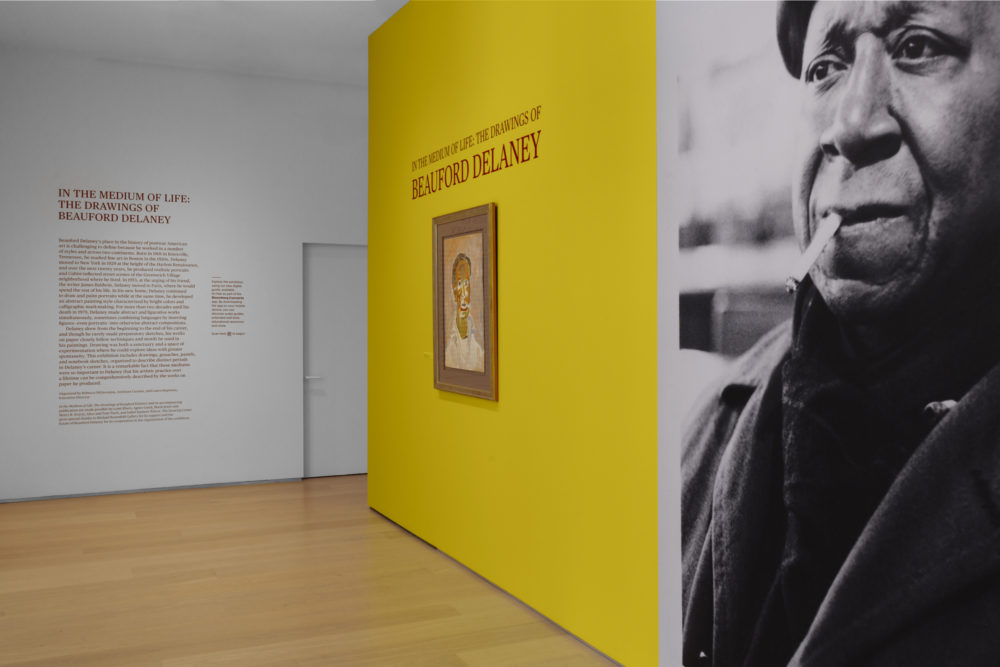
Installation View, In the Medium of Life: The Drawings of Beauford Delaney, The Drawing Center, New York. May 30 - September 14, 2025. Photo: Daniel Terna
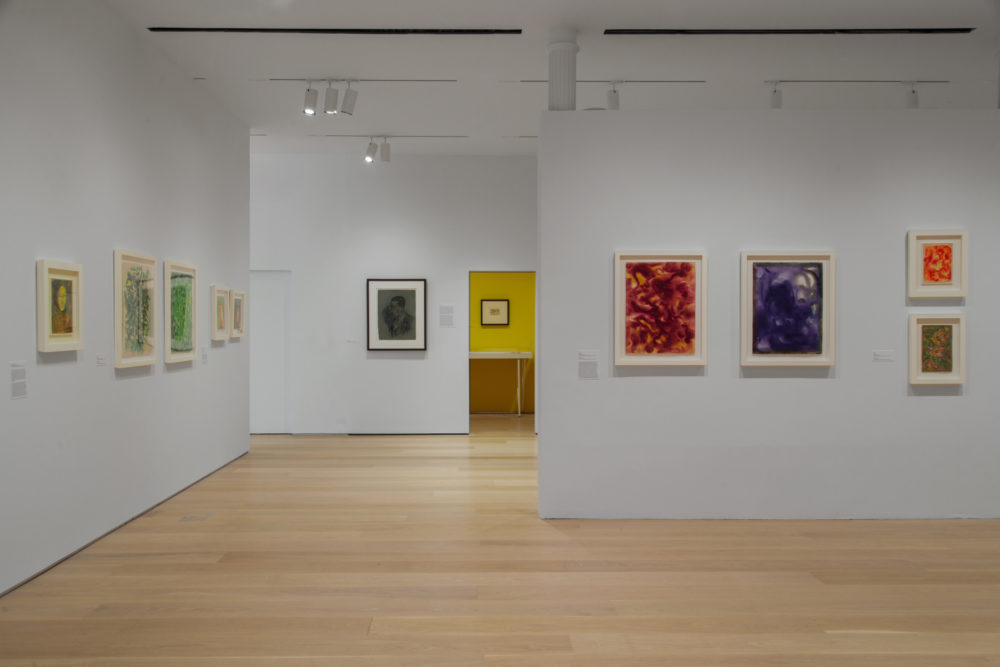
Installation View, In the Medium of Life: The Drawings of Beauford Delaney, The Drawing Center, New York. May 30 - September 14, 2025. Photo: Daniel Terna
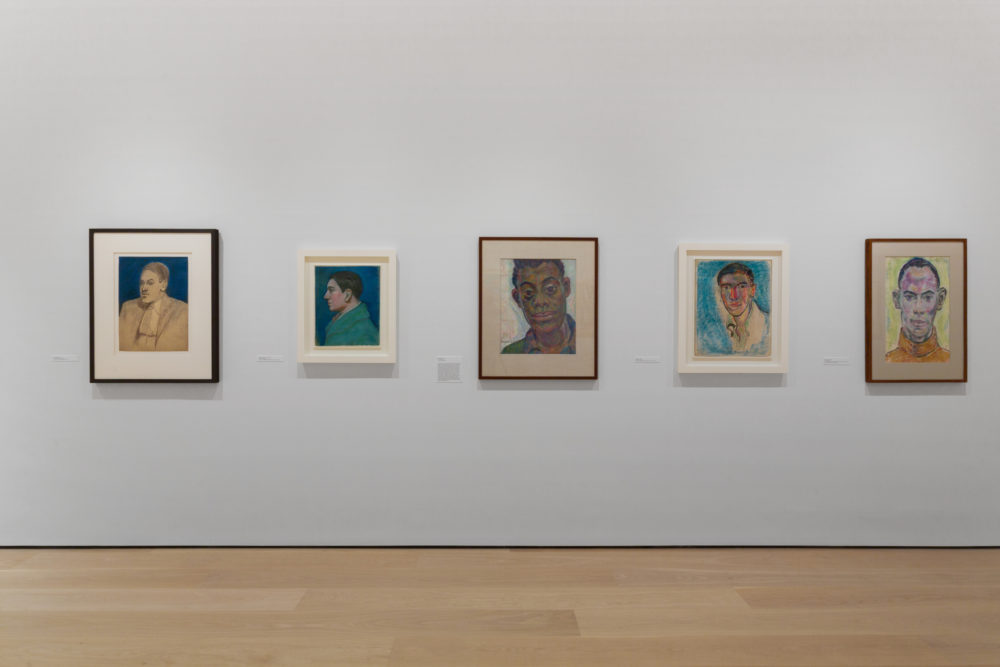
Installation View, In the Medium of Life: The Drawings of Beauford Delaney, The Drawing Center, New York. May 30 - September 14, 2025. Photo: Daniel Terna
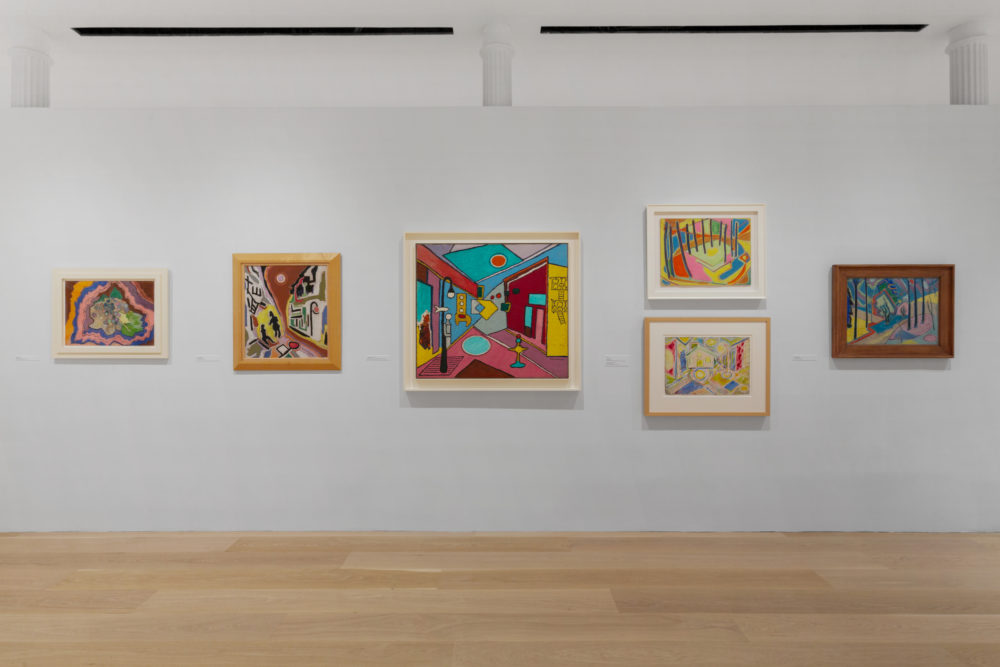
Installation View, In the Medium of Life: The Drawings of Beauford Delaney, The Drawing Center, New York. May 30 - September 14, 2025. Photo: Daniel Terna
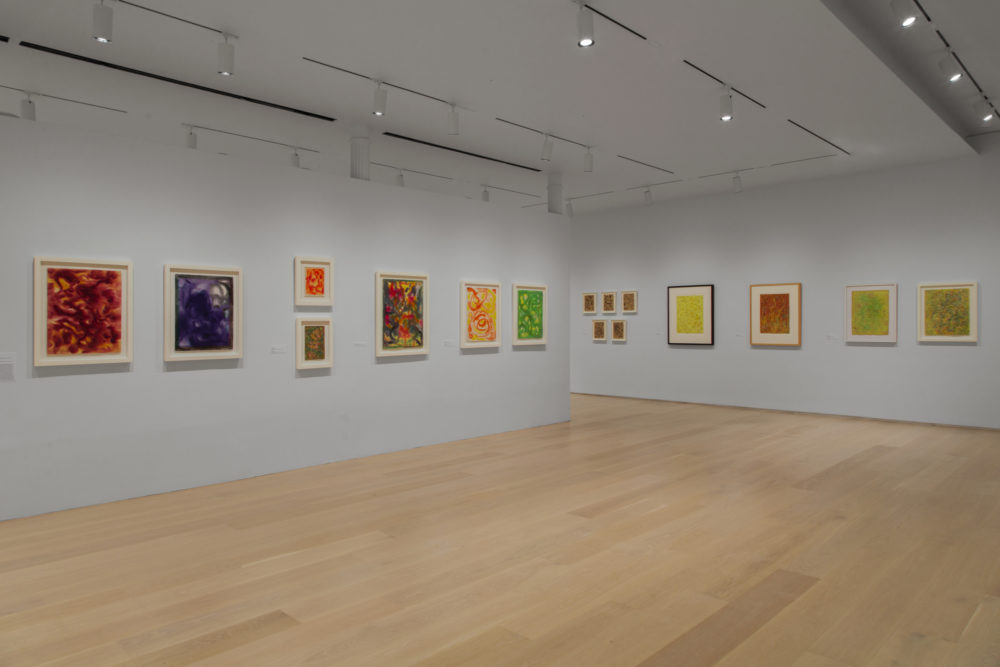
Installation View, In the Medium of Life: The Drawings of Beauford Delaney, The Drawing Center, New York. May 30 - September 14, 2025. Photo: Daniel Terna
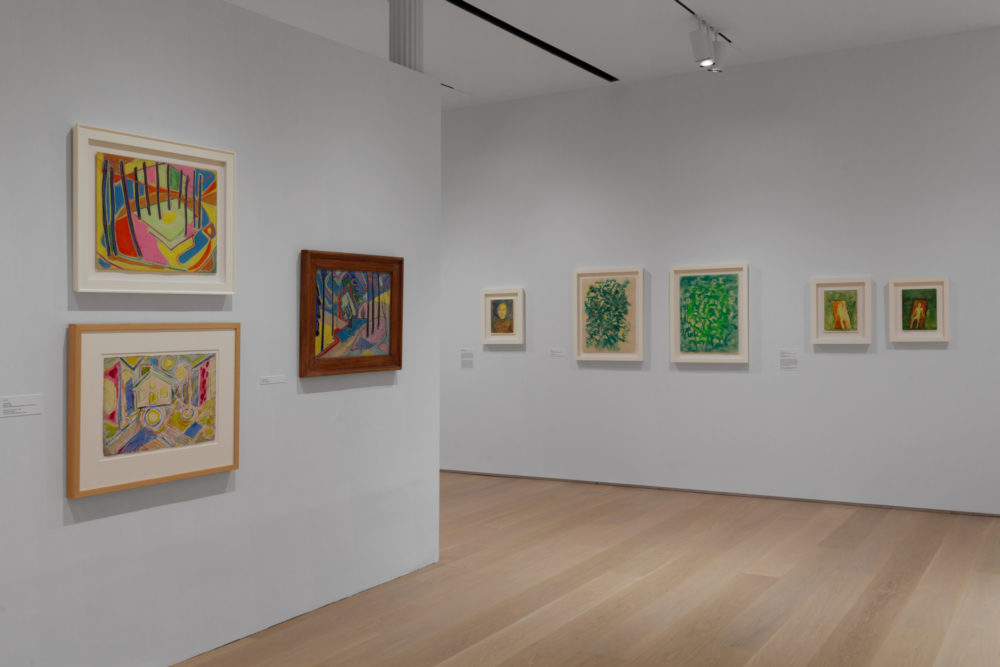
Installation View, In the Medium of Life: The Drawings of Beauford Delaney, The Drawing Center, New York. May 30 - September 14, 2025. Photo: Daniel Terna
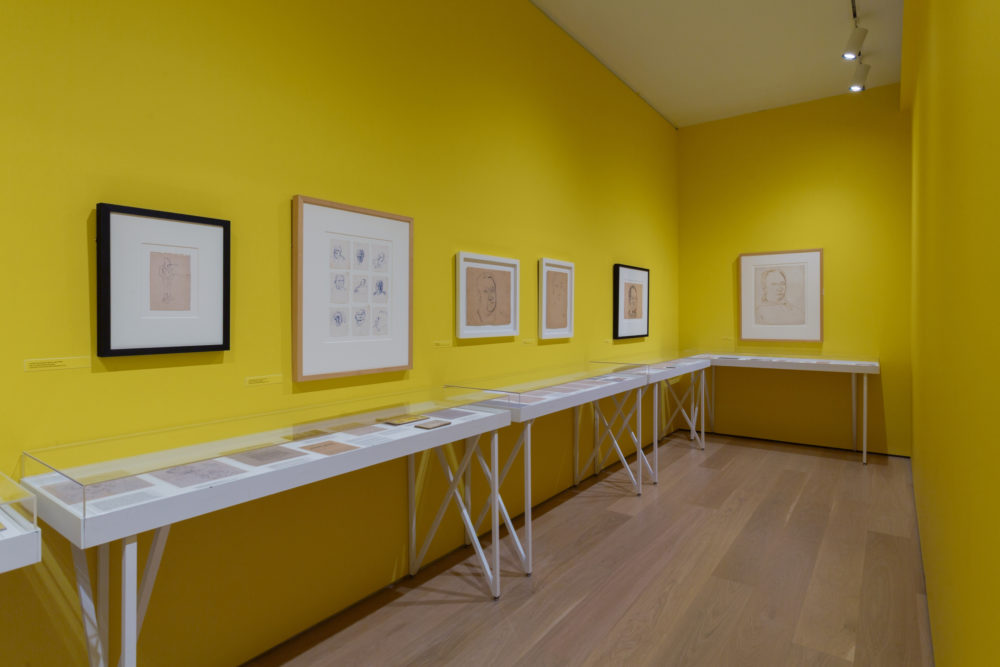
Installation View, In the Medium of Life: The Drawings of Beauford Delaney, The Drawing Center, New York. May 30 - September 14, 2025. Photo: Daniel Terna
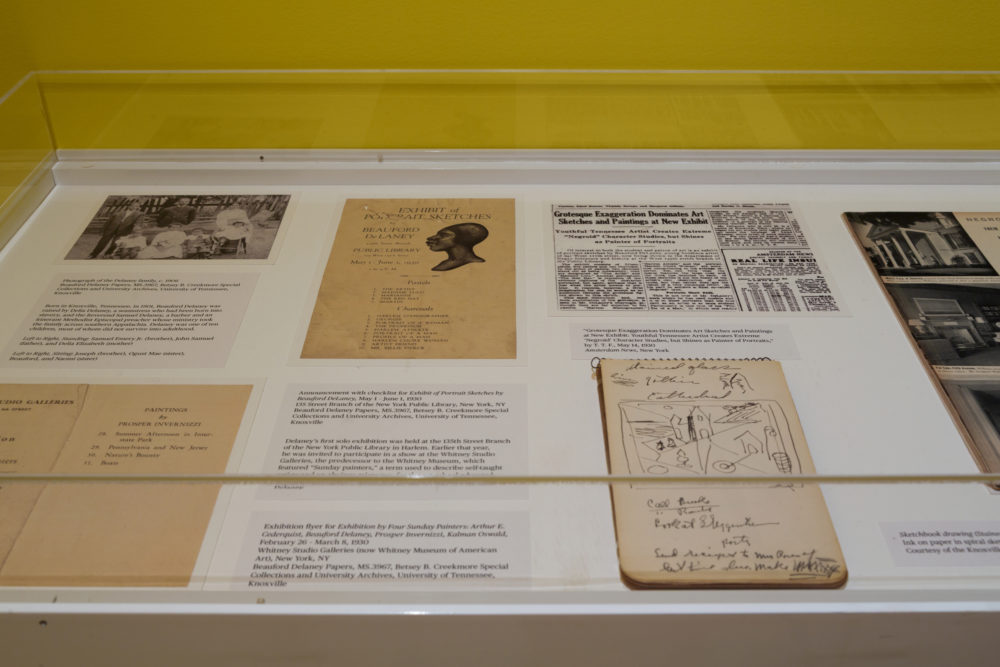
Installation View, In the Medium of Life: The Drawings of Beauford Delaney, The Drawing Center, New York. May 30 - September 14, 2025. Photo: Daniel Terna
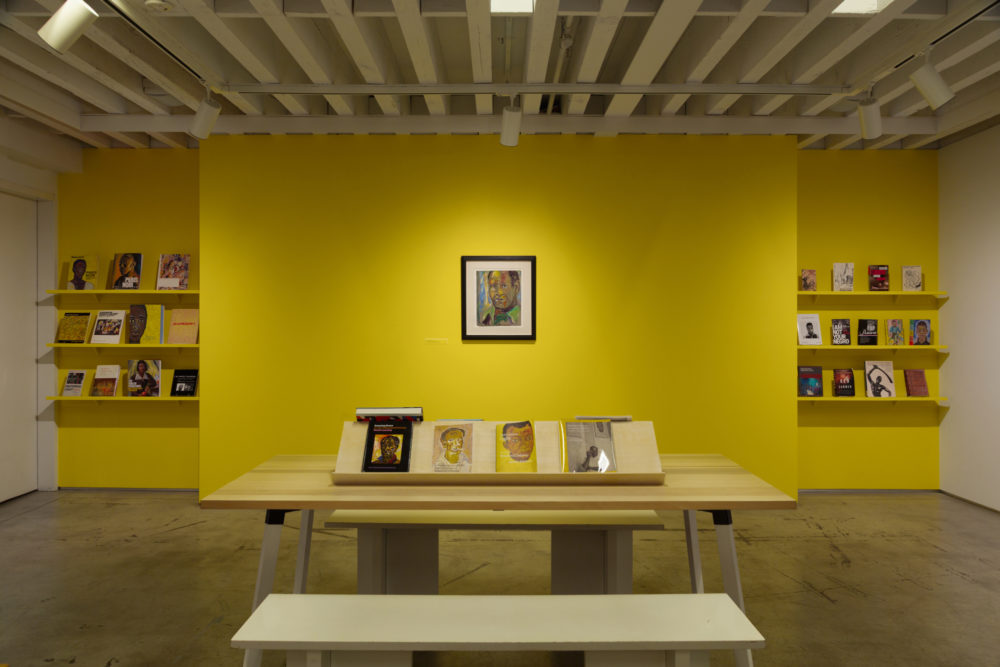
Installation View, In the Medium of Life: The Drawings of Beauford Delaney, The Drawing Center, New York. May 30 - September 14, 2025. Photo: Daniel Terna