Exhibition Walkthrough: Jane Dickson and Laura Hoptman
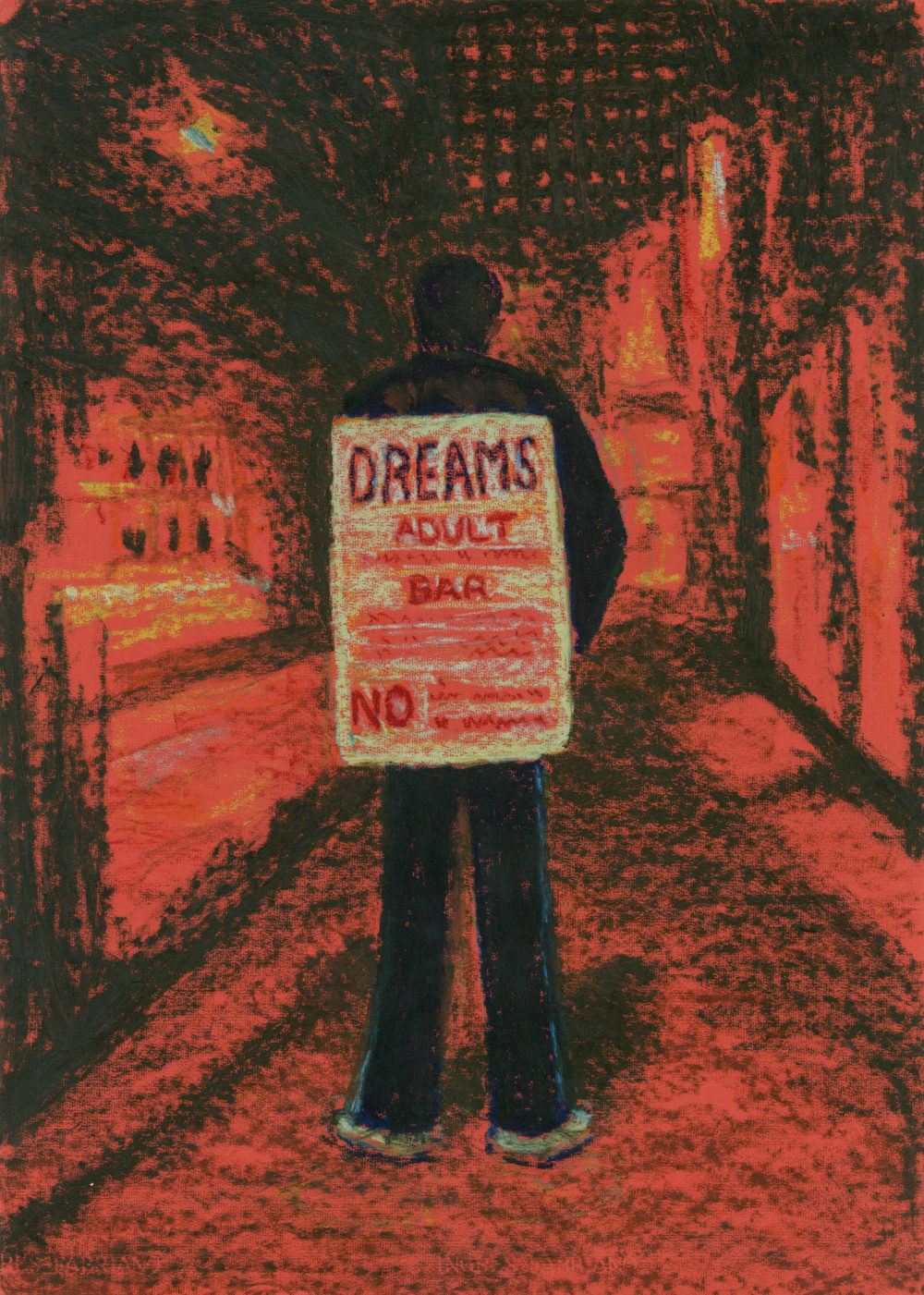
Jane Dickson, Dreams Adult Bar, 1985. Oilstick on red paper, 27 3/4 x 19 3/4 inches (70.5 x 50.2 cm). Collection of KAWS. © Jane Dickson. Courtesy the artist and Karma.
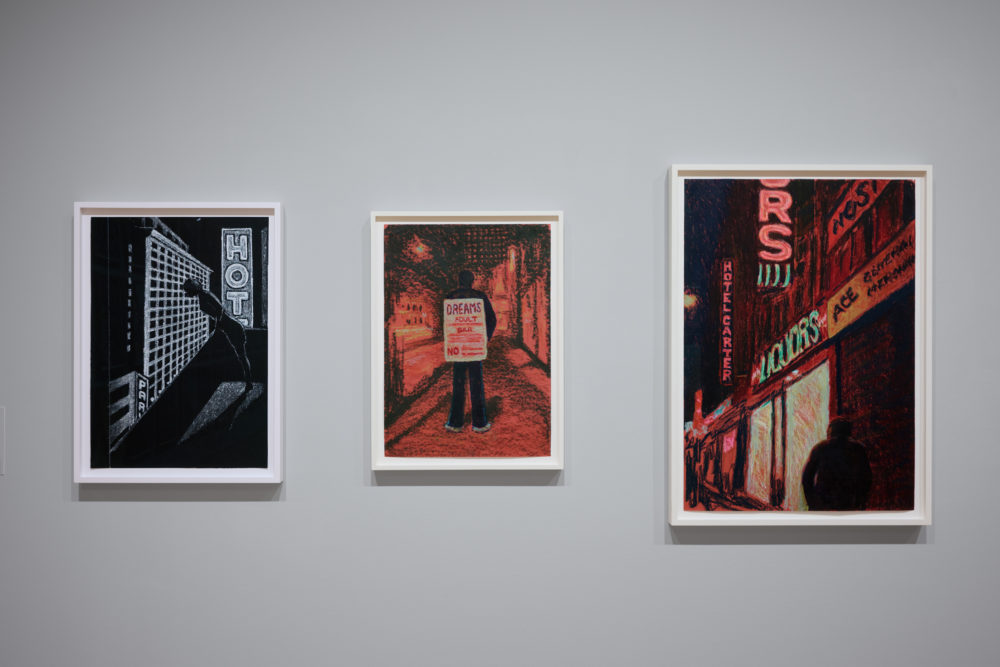
Installation View, The Way I See It: Selections from the KAWS Collection, The Drawing Center, New York. October 10, 2024 – January 19, 2025. Photo: Jason Schmidt
Laura Hoptman: Thank you all for coming. I'm Laura Hoptman. I'm the Executive Director of The Drawing Center, and we're really happy and honored to have Jane Dickson here with us, in this fantastic show, The Way I See It, which are selections from the collection of Brian Donnelly. For those of you who are coming for the first time, to see the show, Brian selected all this work from his own collection, and he hung it himself. I wish I could say I curated because I think he did a great job.
And one of the artists who... He chose from his 4,000 work collection, the artists that he cared about the most. And one of them is to my right, Jane was born in Chicago, and studied at a small university in Cambridge, Massachusetts, Harvard, and then at the museum school in Boston. And when Jane came to New York City, in the second half of the 1970s... 1977. How to put this, you began to live the life that created the oeuvre that you make until today. And as many of you know, Jane is a painter, but she also makes photographs. You've also done media work, as well. No? A little bit, in conjunction with Charlie [Ahearn], or not?
Jane Dickson: You mean prints?
Laura Hoptman: No, I mean Video
Jane Dickson: Yes, I was an animator before I was a painter.
Laura Hoptman: That is interesting. Very interesting. But you're best known, I think it's safe to say, that you're best known for the wonderful paintings that you've been making since the end of the 1970s, on all kinds of different materials, ranging from canvas to AstroTurf. And all of them, or most of them, are inspired by urban life. Our beautiful, horrible urban life in this city. Before I go any further, I'm looking down and realizing that I have to thank a few people. First, Jane. Secondly, Brian Donnelly, for this wonderful exhibition. Thirdly, Aimee Good, our director of education, who organized this. And finally, our wonderful funders. Major support for this show comes from the Neuberger Berman Private Wealth, the Outsider Art Fair; Skarstedt, New York; Christie's Art Finance; and UNIQLO. And we also give our special thanks to 2x4, the design firm, and HUMANMADE, the T-shirt firm, both of whom are long-time collaborators with Brian.
Now, back to Jane. I was saying painter, urban life, but of an extraordinary kind. And what we thought we'd do, with your permission, is start here, in front of three of Jane's artworks. Not exactly in front, but next to three of Jane's artworks, which I think are fantastic examples of what we are speaking of. Albeit on a support that brings it to The Drawing Center, to make it a part of The Drawing Center's display, because they're on cardboard, right?
Jane Dickson: No, they're on paper.
Laura Hoptman: Paper, okay? Heavy, heavy paper.
Jane Dickson: Canson mutante. It's my favorite paper, although actually the red one in the middle is on some other kind of paper that I experimented with.
Laura Hoptman: So as I sit down, I'm going to very quickly finish a bit of your biography, and then we'll get into the Q&A. Is that okay? So again, this is well-known. I loved reading about it, and renewing my memory of this wonderful history of Jane's. And that is that when she came to New York, and settled in Midtown Manhattan, in and around Times Square, she needed a job, like most of us who are artists needed it, and she got a job. It's now Legion, but working with the Times Square Spectacolor board, and thus was born that only in New York connection between the Spectacolor board, and the artists who programmed it, including yourself. But people like Jenny Holzer, very well-known moment. And Jean-Michel Basquiat I read, as well. No? Who else was on the Spectacolor? Everybody. Kiki Smith? No?
Jane Dickson: I don't think so.
Laura Hoptman: Ahh, I'm getting it wrong.
Jane Dickson: I curated the first year. I said I would make it happen, if I could pick the artist, because I had some wonderful artist friends, that people hadn't heard of yet. So the first year was Keith Haring, Jenny Holzer, who was doing paper cups. So I introduced her to LED lights, David Hammons, CRASH. Those were some of the highlights... But then other people ran that series for another eight years, so there were many, many artists. So I said no to your guesses, but they actually may have been in the following years, that I just wasn't part of.